




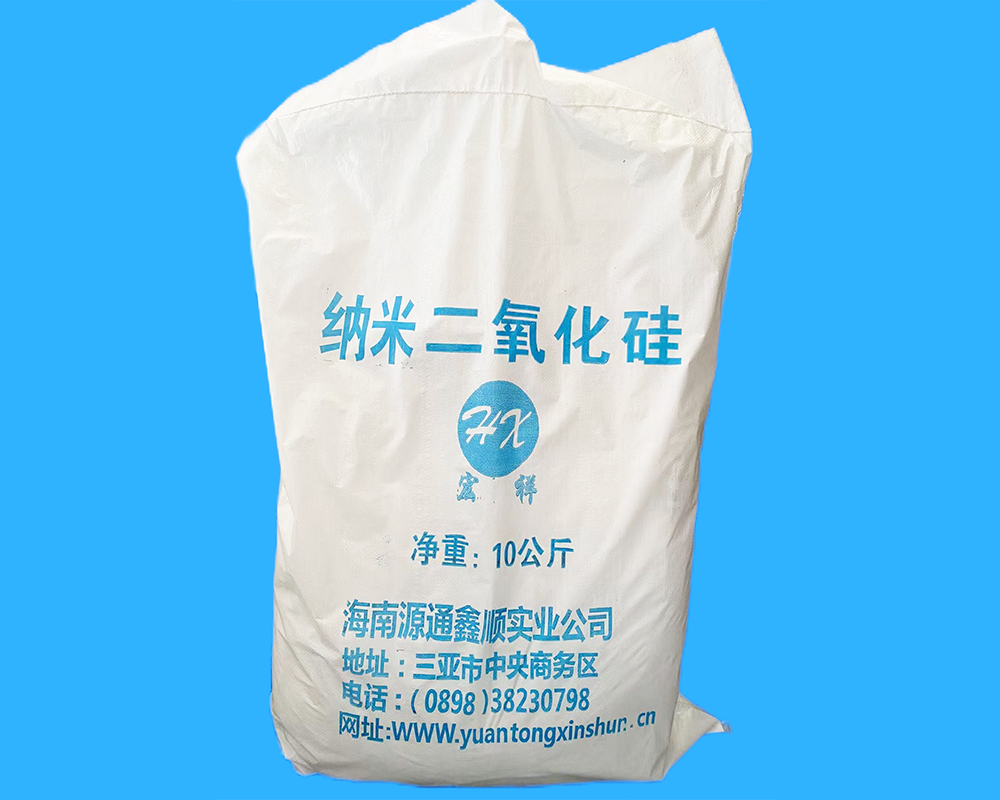
nano-silica
Fumed silica is a very fine amorphous silica, molecular formula SiO2 it is a white fluffy powder, porous, non-toxic, tasteless and pollution-free, high temperature resistance, and it has chemical inertia. Composed of spherical primary particles. The primary particle **** has an average diameter of 40nm and a minimum diameter of 7nm. If the primary particles of the 1 gram 200 scale were arranged in a chain next to each other, it would be about 17 times the average distance between the Earth and the moon. The size of the primary particle can be further illustrated by another example: the ratio of the diameter of the primary particle to the diameter of a football for 200-ratio meter fumed silica is equivalent to the ratio of the diameter of a football to the diameter of the earth. Primary particles do not exist in isolation, they form bodies and agglomerates. The behavior in different applications is determined by the size of the primary particle and the distribution of the agglomerates in the application system. Unlike precipitation, dioxygen does not have a definite size of the agglomerates. With the increase of primary particle size, the particle size distribution curve widens.
Nano silica technical indicators:
|
variety |
model |
Average particle size (nm) |
Bulk density (g/cm3) |
Content(%) |
Hydroxyl content (%) |
UV reflectance(%) |
|
microporous particles |
vk-sp15 |
15±5 |
≤0.12 |
≥99.5 |
≥45 |
≥85 |
|
microporous particles |
vk-sp30 |
30±5 |
≤0.12 |
≥99.5 |
≥45 |
≥85 |
|
microporous particles |
vk-sp50 |
50±5 |
≤0.12 |
≥99.5 |
≥45 |
≥85 |
Nano silica product applications:
1. Coating: Based on the original formula of water-based latex paint, after adding 0.3-1% of the total weight of nano-silica (needs to be fully dispersed), its suspension stability, thixotropy, bonding strength between the coating and the substrate, The smoothness and other properties are significantly improved, the drying time is shortened, the artificially accelerated UV aging test time is doubled, the washing resistance is increased from thousands to tens of thousands of times, and the stain resistance of the coating is also significantly improved.
2. Building waterproofing agent: Nano-silica is used in building waterproofing agents. It can quickly penetrate into the interior of building materials, block capillaries, form a three-dimensional network structure, and become a waterproof layer with excellent performance. It has great anti-aging and waterproof properties. Improved, thus making the building impervious to water seepage, mildew, moss, frost cracking, weathering resistance, etc., presenting a series of unique properties.
3. Adhesive: Nano-silica is used in adhesives, which can greatly improve the bonding strength. The tensile strength and elongation increased by 21% and 23% respectively compared with those without nano-silica filler.
4. Inkjet printing and photo paper: The coating uses nano-scale silica material to form extremely fine inorganic-organic composite particles. After the ink is printed, it is immediately absorbed by the honeycomb-like micropores, and the coating absorbs ink. It is very strong, and can also show a good sense of layering when printing parts with very dark tones; it dries quickly, and you can touch it directly after coming out of the printer; its coating material is very delicate, not only has high brightness, but also can match high-definition Precision photo printing. It has very good waterproof properties and can remain intact even if it is soaked in water for several hours. Its advantages are "three highs and one fast": high gloss, high waterproof, high ink absorption and quick drying.
5. Ceramics: Using nano-sio2 to composite ceramic substrates not only improves the density, toughness and smoothness of the substrates, but also significantly reduces the sintering temperature. The main performance indicators reach or even exceed products produced in the United States, Japan and other countries.
6. Other aspects: Adding nano-silica during the processing of vinyl fiber fabrics can change the properties of vinyl and play a matting effect. On audio and video tapes, nanosilica is used as an anti-sticking agent. In the light bulb industry, lining the inner wall of the light bulb with a nano-silica interference film can improve the luminous efficiency of the light bulb and extend the service life of the light bulb. Adding surface-treated nano-silica to organic glass can improve the material's UV radiation resistance and impact strength. In the battery industry, nanosilica is used as a separator. In the catalyst industry, nanosilica is used as a carrier. In addition, nanosilica can prepare thermal insulation materials with superior performance.
nano-silica
Fumed silica is a very fine amorphous silica, molecular formula SiO2 it is a white fluffy powder, porous, non-toxic, tasteless and pollution-free, high temperature resistance, and it has chemical inertia. Composed of spherical primary particles. The primary particle **** has an average diameter of 40nm and a minimum diameter of 7nm. If the primary particles of the 1 gram 200 scale were arranged in a chain next to each other, it would be about 17 times the average distance between the Earth and the moon. The size of the primary particle can be further illustrated by another example: the ratio of the diameter of the primary particle to the diameter of a football for 200-ratio meter fumed silica is equivalent to the ratio of the diameter of a football to the diameter of the earth. Primary particles do not exist in isolation, they form bodies and agglomerates. The behavior in different applications is determined by the size of the primary particle and the distribution of the agglomerates in the application system. Unlike precipitation, dioxygen does not have a definite size of the agglomerates. With the increase of primary particle size, the particle size distribution curve widens.
Nano silica technical indicators:
|
variety |
model |
Average particle size (nm) |
Bulk density (g/cm3) |
Content(%) |
Hydroxyl content (%) |
UV reflectance(%) |
|
microporous particles |
vk-sp15 |
15±5 |
≤0.12 |
≥99.5 |
≥45 |
≥85 |
|
microporous particles |
vk-sp30 |
30±5 |
≤0.12 |
≥99.5 |
≥45 |
≥85 |
|
microporous particles |
vk-sp50 |
50±5 |
≤0.12 |
≥99.5 |
≥45 |
≥85 |
Nano silica product applications:
1. Coating: Based on the original formula of water-based latex paint, after adding 0.3-1% of the total weight of nano-silica (needs to be fully dispersed), its suspension stability, thixotropy, bonding strength between the coating and the substrate, The smoothness and other properties are significantly improved, the drying time is shortened, the artificially accelerated UV aging test time is doubled, the washing resistance is increased from thousands to tens of thousands of times, and the stain resistance of the coating is also significantly improved.
2. Building waterproofing agent: Nano-silica is used in building waterproofing agents. It can quickly penetrate into the interior of building materials, block capillaries, form a three-dimensional network structure, and become a waterproof layer with excellent performance. It has great anti-aging and waterproof properties. Improved, thus making the building impervious to water seepage, mildew, moss, frost cracking, weathering resistance, etc., presenting a series of unique properties.
3. Adhesive: Nano-silica is used in adhesives, which can greatly improve the bonding strength. The tensile strength and elongation increased by 21% and 23% respectively compared with those without nano-silica filler.
4. Inkjet printing and photo paper: The coating uses nano-scale silica material to form extremely fine inorganic-organic composite particles. After the ink is printed, it is immediately absorbed by the honeycomb-like micropores, and the coating absorbs ink. It is very strong, and can also show a good sense of layering when printing parts with very dark tones; it dries quickly, and you can touch it directly after coming out of the printer; its coating material is very delicate, not only has high brightness, but also can match high-definition Precision photo printing. It has very good waterproof properties and can remain intact even if it is soaked in water for several hours. Its advantages are "three highs and one fast": high gloss, high waterproof, high ink absorption and quick drying.
5. Ceramics: Using nano-sio2 to composite ceramic substrates not only improves the density, toughness and smoothness of the substrates, but also significantly reduces the sintering temperature. The main performance indicators reach or even exceed products produced in the United States, Japan and other countries.
6. Other aspects: Adding nano-silica during the processing of vinyl fiber fabrics can change the properties of vinyl and play a matting effect. On audio and video tapes, nanosilica is used as an anti-sticking agent. In the light bulb industry, lining the inner wall of the light bulb with a nano-silica interference film can improve the luminous efficiency of the light bulb and extend the service life of the light bulb. Adding surface-treated nano-silica to organic glass can improve the material's UV radiation resistance and impact strength. In the battery industry, nanosilica is used as a separator. In the catalyst industry, nanosilica is used as a carrier. In addition, nanosilica can prepare thermal insulation materials with superior performance.


